Shindig! #174 – Connie Converse
Was CONNIE CONVERSE the first singer-songwriter? The mysterious artist’s music, which chronicled “infidelities, forbidden relationships, deaths, longings and socially unacceptable behaviours” during an era when such things were frowned upon, and took 55 years to be released, certainly suggests so. The more you investigate Converse’s story, the further the mystery deepens.
CAMILLA AISA reveals the layers behind the most anachronistic artist of all-time.
“I wouldn’t bother except that optimistic people keep making appointments for me”
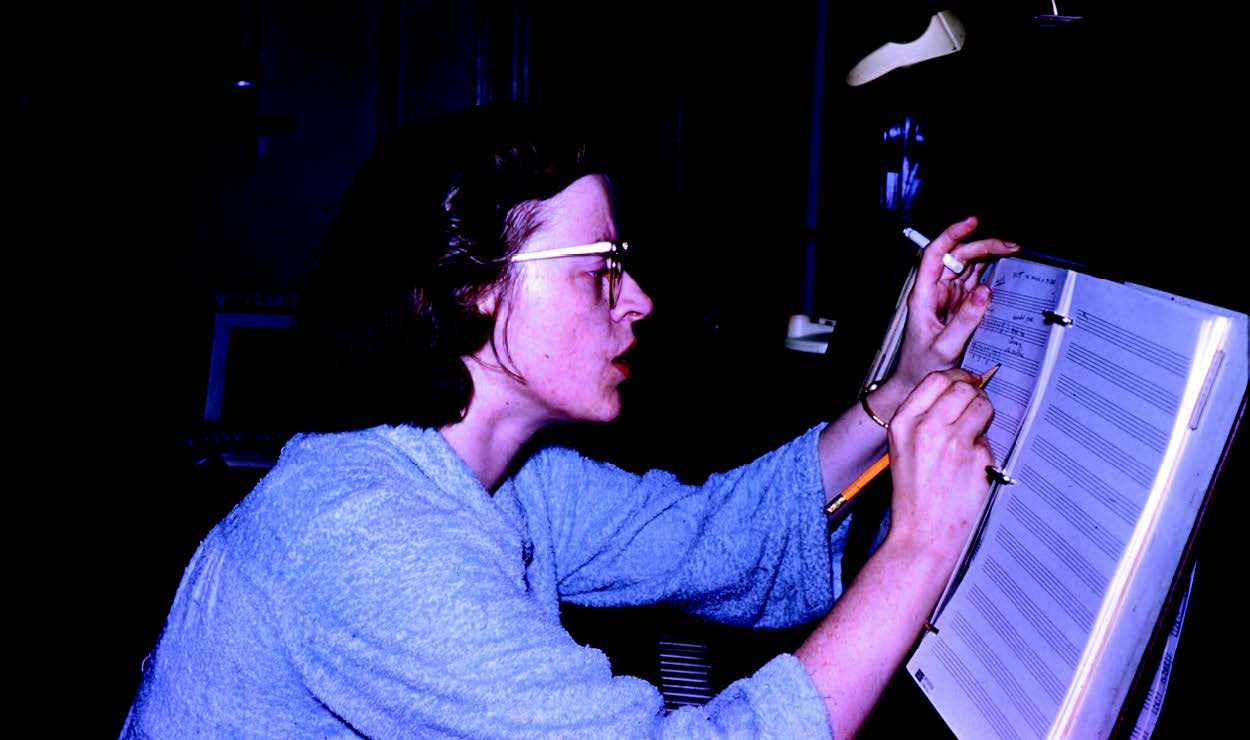
Converse had picked up a guitar a few years earlier. “I’ve been looking up chords for guitar in the back of The People’s Song Book,” her diary notes. “I find I had figured most of them out by myself, without thinking about their names. I used to think a guitar was a vulgar and unpleasing instrument. But if treated properly, it rises above the realm of the musical cliche. And with a good song, even cliches sound good.” It didn’t take long for her, until then an aspiring novelist, to start composing her own songs. The first came in 1949, a poem by AE Housman, ‘With Rue My Heart Is Laden’, set to music in 42 short seconds. Converse would soon turn to writing original lyrics for her songs, starting with ‘Down This Road’, a slice of early American folk lulling a country & western tale. In her mind, it was an obvious development. “I always did hum things,” she would simply say to the small coterie of friends who’d soon get to hear her compositions, striking originals crafted at a time when people with guitars were expected to interpret old tunes. Working by day and spending most of her free time crafting songs in her studio apartment, Converse bought herself a Crestwood 404 reel-to-reel tape recorder and began committing her creations for voice and guitar to tape. Every time a new composition was complete, she would dispatch it to her younger brother in Michigan. When their parents visited New York for Thanksgiving ’52, she found it the right time to formally disclose her new activity. She played some choice material for them (in what was arguably her first performance in front of others) and recorded the whole thing. Unlike the solo renditions contained in the previous tapes, here Connie was mostly hesitant. She finally regained her confidence with ‘Talking Like You’, the song that, more than 70 years later, would be her most streamed. But then the reaction was less enthusiastic – her father, in particular, puzzled by the line “In the yard I keep a pig or two, they drop in for dinner like you used to do.” Creatively at least, Converse was on a hot streak.
In a matter of four of five years, she found herself with some 25 songs. “I am furtively exploring the concrete commercial alleys of the songwriting racket, just in case there might be a buck in it for me,” she confided in a letter. In the meantime, though, she had a new job: she was working at a print shop that doubled as a publisher. Most significantly, as the ’50s progressed Connie Converse found an audience. They were friends, and friends of friends, whose house parties would offer her a place where to showcase her compositions. A new acquaintance, Bill Bernal, found her intimate performances arresting enough to call up a pal of his with a taste for state-of-the-art tape recording. It was on 23rd January ’54 that Connie Converse was introduced to Gene Deitch.
“Earlier, in the mid-50s, I’d been working in Manhattan, and living up the river in the village of Hastings-on-Hudson, having those Friday evening record sessions,” Deitch would later recall. “ One evening, my best friend and amateur talent scout, Bill Bernal, brought a young woman carrying a guitar. Her name was Connie Converse – plain Jane, wearing glasses and not at all looking like she would fit in with our crowd. When she started to sing, she transformed us!”
To read the full article order issue #174 here, Subscribe here.