Jesse Hector: A Message To The World – The 1998 Shindig! interview
In memory of London legend, rock star and music obsessive, JESSE HECTOR.
JON ‘MOJO’ MILLS’ history of a much-missed one of a kind.
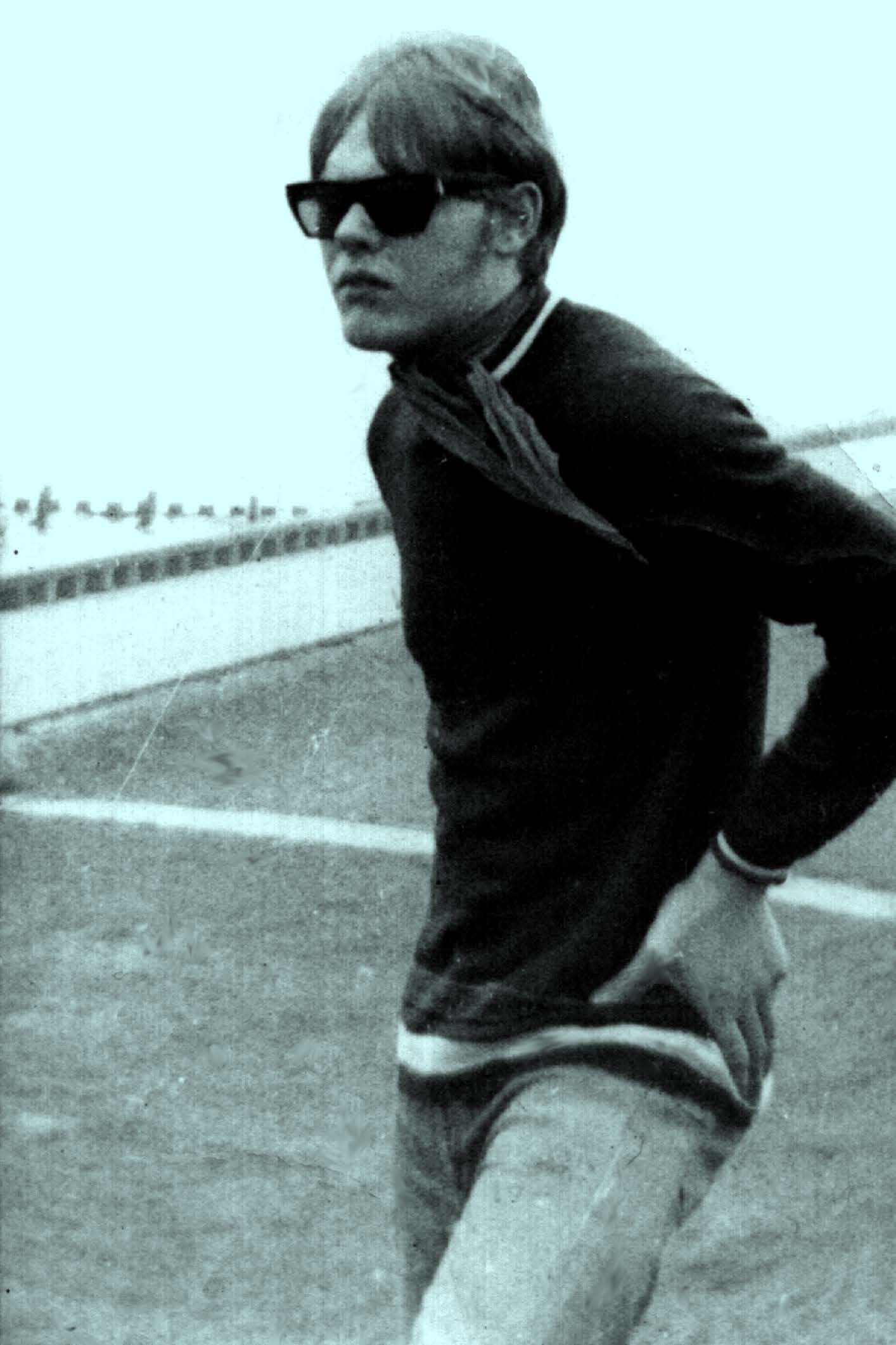
If you frequent the collectors record shops in London you may bump into a healthy-looking middle-aged guy who wears his hair in a quiff and dresses in sharp ’50s attire. He’s usually standing around chatting with music fanatics, both young and old, about his memories of rock ’n’ roll. You could say he’s eccentric, although he’s got all of his marbles. He just likes to talk. The man in question is Jesse Hector. For those in the know he is most remembered for his ’70s mod-punk trio, The Hammersmith Gorillas, who anticipated the UK punk rock scene with their 1974 Larry Page produced version of ‘You Really Got Me’. But there’s a whole lot more to Jesse than that. Here, for the first time, we trace Jesse Hector’s illustrious career.
On Monday 25th August ’98 some of the Shindig! team (PJ, Mark Raison and I) took it upon ourselves to take Jesse Hector to his fave pub in Camden, North London, get him talking and leave the cassette recorder rolling. After three hours of listening to tales of riotous mod bands, heavy rock and Jesse’s misfortune of never making it BIG, we all came to the conclusion that you won’t meet a nicer bloke. I must note that far more was spoken about than is featured here. When I asked Jesse a question about a group called Shorty & Them he replied: “You gotta remember, there are a lot of bands I probably saw – but I might’ve been pissed, pulling a bird, or out the back shagging. If somebody had said to me back then, ‘Will you keep all of this knowledge in the back of your head because in ’98 people are gonna start interviewing you?’ I’d have come alive and stood at the alter and studied it. I really didn’t think this was gonna last. If you’re at the back of a hall with a nice bird and getting all excited, you’re not gonna be thinking about seeing a band called Shorty & Them, are ya?”
Jesse Hector was born in Kilburn, North West London in ’47. He still resides there to this day, a Londoner born and bred. By ’59 British rock ’n’ roll was really coming into its own, and he was there as a part of it. “The flashy rock ’n’ roll took off with Cliff Richard’s ‘Move It’, which was really exciting and rebellious.” So inspired was Jesse that he decided to follow suit and play this new “rebellious” music himself. In ’60, at the tender age of 13, he formed The Cravattes with his best friend Adrian Stambach (who later went on to join The Clique).
In ’61, Jesse experienced his first “near miss” at fame – the band were gaining a following locally and even achieved some front page coverage in the local press. It looked to be taking off. “We cut a four-track demo which was supposed to be an EP for Pye but due to some confusion on my part it didn’t get released.”
Dressed up as teddy boys in the early ’60s, it was rock ’n’ roll all the way for the guys – but something suddenly happened in ’62 that changed Jesse. “The Beatles were the first loud heavy rock ’n’ roll band. The music was very loud and aggressive, it was different. Although Johnny Kidd & The Pirates had already been playing wild R&B they were still stuck in the ’50s, style-wise. The Beatles were totally new!’ So fanatical did Jesse become that he saved up his pennies and drove to the north Midlands to catch his new heroes live on stage – this was still early ’62. “As soon as I saw them it made my backbone go weak and I knew that they were going to take the world by storm. This was it! The whole dimension of the image was so new and exciting, that was the way to go. I had to get rid of my quiff.”
In ’63, The Cravattes combed their hair forward to resemble The Beatles. At the time they took on an R&B influence via The Beatles, as were many local London combos. “We knew we had to move forward – we started doing stuff like ‘Talking ’Bout You’.” With the ’50s rock ’n’ roll style becoming passé, London moved on. The Cravattes split in ’64 as London became a very different place. The Rolling Stones were becoming a huge success and the long haired R&B look became the vogue.
The Cravattes’ bassist, Adrian, had built up good reputation and was recommended to Willesden band, The Clique. “They (The Clique) used to use The Up club and Adrian and I went along for a listen. He had a blow with them, liked them and joined.”
Adrian grew his hair long like the rest of the band and got really into The Pretty Things and Stones. Jesse, currently not in a band, took to hanging out with The Clique due to his old buddy Adrian being a member. The Clique looked like they had great promise on the current London scene. Liverpool had been exhausted and the record companies started to look back at London. The long haired R&B groups were in.
On one of their few nights off from gigging Jesse recalls sitting with The Clique in the Wimpy hamburger bar in Kilburn. “Looking out of the window we saw a Bedford van stopped at the traffic lights with ‘The Birds’ written on the side in very big letters. We thought it was a bit big-headed, but impressive. We raced over and they said ‘Get in. Get in.’ They were off to The Marquee. But we didn’t go. It was really friendly back then, everyone knew each other.”
The Birds have received great exposure over the last 15 years, though it is only through the Dig The Fuzz Complete Recordings that we can put into context the brilliance of The Clique. “They were highly rated by all the other bands on the scene, like The Birds. They were part of the family,” remembers Jesse.
By ’65, Jesse and his friends The Clique were becoming more and more obsessed by the mod scene that had been taking off over the last year. They all had their hair cut to a shorter length and became more inspired by The Who than the previous year’s R&B style.
“The Who were the first to cut their hair and open the parting up ’cos it was regarded as a ‘poofs’ haircut before. If you wore your hair like that in the past it was like ‘Ooohh, dodgy!’ They augmented that style. They changed the scene by early ’65 very much to the mod thing.”
Jesse stresses that the fashions were changing week by week, and to keep up you had to change along with it. Even long-hairs like The Birds surrendered to the barber’s chair and were tidied up, made into mods.
“In ’66 the whole country was mod. If there were 30,000 mods you’d only have one fucking rocker.” The Jesse of ’66 was a stylish mod and it was this influence that enormously affected him for his entire musical career. He was absolutely fanatical about it. Every weekend was good – you could get to see lots of new and exciting groups. “One of the best fucking bands I ever saw were John’s Children. They blew me away. I saw ’em at Allingdale Road’s Starlite Ballroom in Greenford quite a lot in late ’66. They were real showmen and the great thing about them was that they levelled off with The Small Faces’ image. They were so good looking.”
By far the biggest influence on Jesse – which paved his musical path – were The Small Faces. He saw them as Steve Marriott & The Moments in ’65 and was not impressed. However, a year later things had changed. When he first saw them as The Small Faces he was won over immediately. At one of the gigs Marriot’s green flares brushed against his face as he stood eagerly watching in the front row – a fond memory.
In December ’66 Jesse helped bring about the break-up of The Clique. “What happened is they were due to start another load of gigs, but I wanted to go on and do another type of thing. Adrian wanted to leave The Clique and come back with me and this caused a bit of a problem actually. He was such a good bass player that he could never be replaced, so the band split.”
Jesse formed The Rock ’n’ Roll Trio in January ’67 to take around clubs like The Scotch Of St James, Blaises, Samantha’s, etc. Being a forward-thinking mod, he made the decision to go out and do something completely different. In fact, you could even rank the Jesse of this period alongside Ziggy Stardust era David Bowie. The Rock ’n’ Roll Trio played old-style rock ’n’ roll but in a heavier manner, not unlike Blue Cheer’s version of ‘Summertime Blues’. They dressed in black and had their dyed black hair quiffed up into huge pompadours. “It failed miserably,” he recalls. “It was the kinda thing that would either take off or plummet. It did the latter.”
The hard-rock trio phase of ’67, led by Hendrix and The Cream, deleted the smart mod fashions and replenished the late ’60s with screaming electric solos and hair to match. “The Creation in ’66, after their two singles on Planet, were the words on everyone’s lips. The Creation were going to be the next supergroup, the big thing that the world was going to copy. Then out of the blue came Hendrix and he just wiped the face of the world clean. He even swept The Who to the side and left them playing shows to no more than 500 people.” However, Jesse understands the importance of Hendrix. “No one could touch him.”
In ’67, following the lack of interest in The Rock ’n’ Roll Trio, Jesse formed The Way Of Life – in response to the new wave of Hendrix-style sounds. “It was a smart band. A few of the guys twizzled their hair out like Hendrix and Clapton.” However, it didn’t last – it was a short-lived attempt at hitting the big time and again it didn’t.
Later that year Jesse formed The Mod Section, influenced by his love of the mod days of old. He compares the band to The Small Faces, The Move and The Who. “We played at The Middle Earth and The Marquee and had some great times, though we didn’t really do much. In ’68 it was a different period and nobody wanted mod. Everyone was growing their hair.”
The drug scene of the late ’60s was something Jesse didn’t stand for. (Seeing how healthy he is now, avoiding it all proved to be a good move.) “People were checking out the LSD and didn’t realise the dangers of it. Steve Marriott blew his brains out. Still, I suppose some good music came out of it, listen to Ogden’s Nut Gone Flake.”
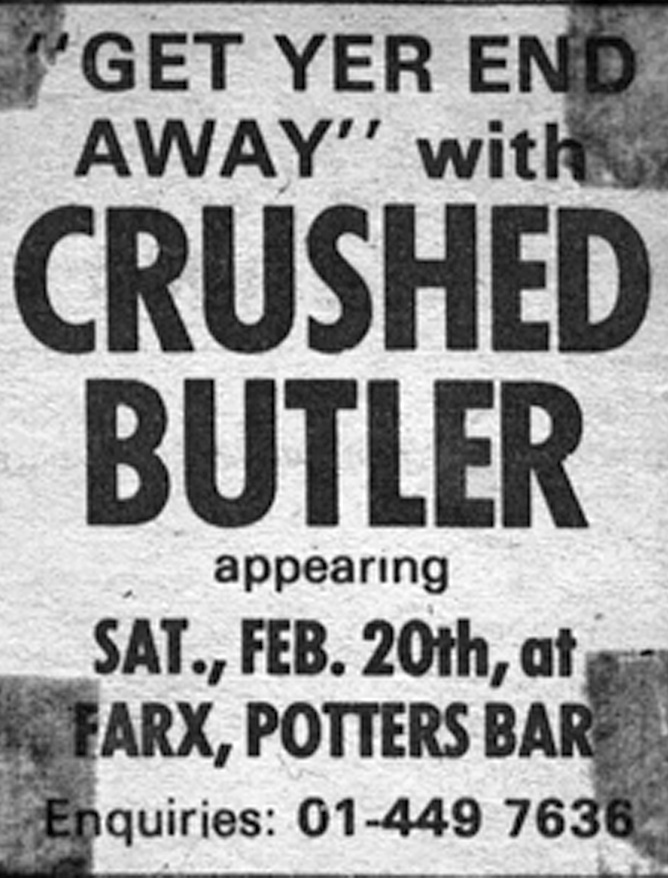
By the middle of ’68, disillusioned with the music business, Jesse decided to learn tailoring as a trade and to make some money for a change. He was tired of all the near misses. At 21 years of age he thought he’d better do something. But in early ’69 whilst working, Jesse met Alan Butler who happened to play rhythm guitar. The two got together – after discovering that Jesse’s talent also lay with the guitar, Alan switched to bass. Before long they formed Crushed Butler along with 17 year old rebel drummer, Darryl Reed. “He was like Keith Moon. A maniac.”
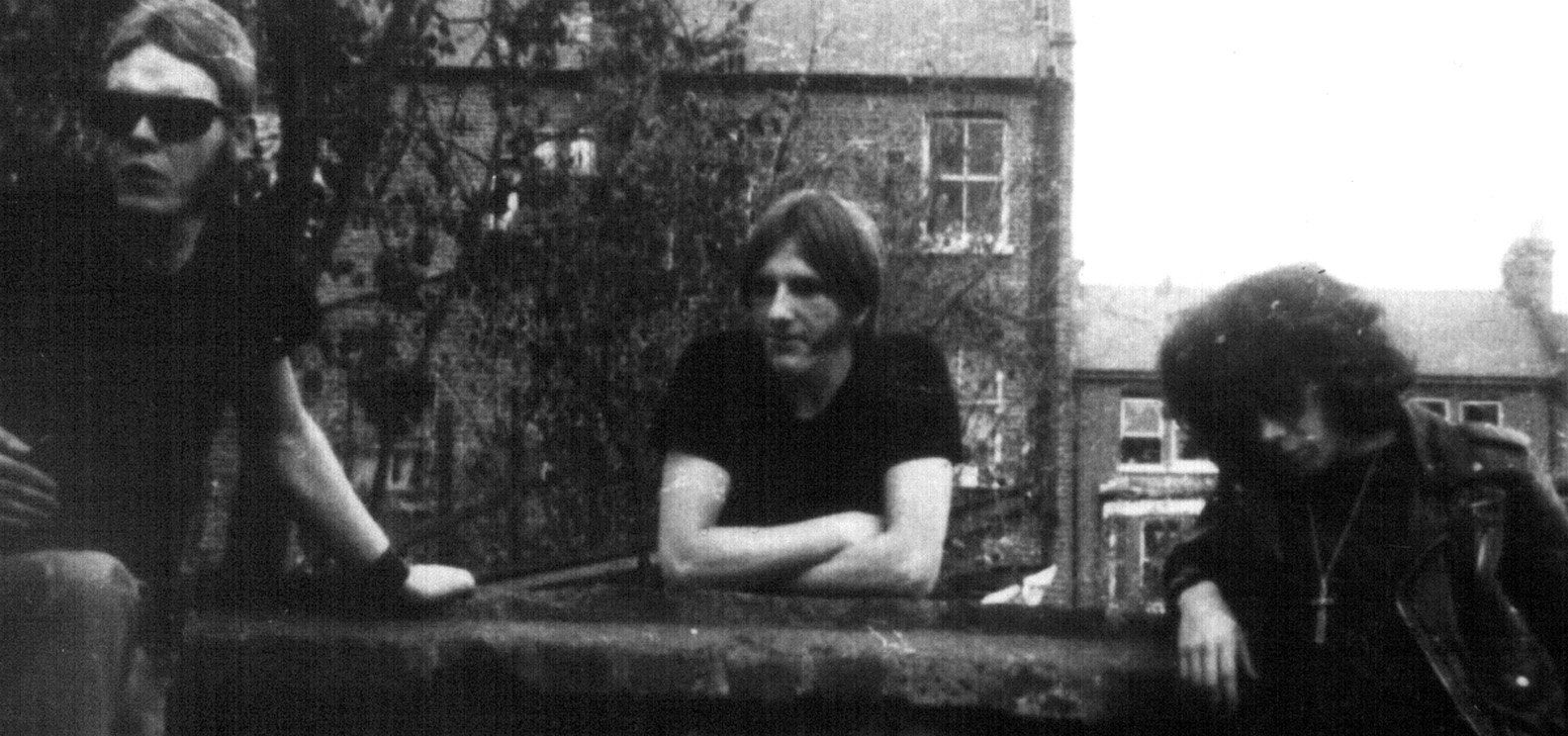
“I only came back to music as The Small Faces had just broken up. That really upset me. I lost sleep and couldn’t eat or anything. I became quite ill. I couldn’t get over that… it was the worst break-up ever. I was hoping they were going to go to America and become superstars.
“I decided that if they didn’t do it then I fuckin’ would!”
Crushed Butler was a reaction to the music of the time. “Nineteen Sixty-nine was a horribly boring year – it was all long hair and beards. The Beatles had grown their hair so long you could stand on it. The bands were all farty and horrible. The Small Faces had broken up and grown their hair. The only good band were The Who. But Crushed Butler was a wild band and still mod. We were heavy like The Who – we went on and stole everything. We were three fresh young mods full of energy. We were a Small Faces type band. We gave ’em a pasting.”
The band played some high profile gigs over their two-year existence alongside the likes of Atomic Rooster, Third World War and Kevin Ayers among others. The reception was great, and stories of the band blowing the major acts off stage are commonplace.
“There was this green light going out and I thought we were gonna be up their with The Beatles. But there was something wrong, because we’d do all these gigs, and someone would say, ‘Did you see who was in the audience tonight?’ Then all of a sudden Marc Bolan was wearing twizzled hair like Darryl, and Slade wore the big sideburns and all that. We thought, ‘Hey, we’ve given it all away. They don’t want us anymore and we ain’t even nowhere.’ There was Marc Bolan, Rod Stewart and Slade up there doing it – doing it exactly the way that we started out!”
In ’71 Darryl left for America where he did well liaising with former members of The Doors and building up a career acting in experimental and horror films. Jesse thinks of his drumming as nothing short of magnificent. But due to the band’s tendency to climb up the musical hill and then instantly roll back down the other side, the group split.
Jesse carried on under the new name of The Hammersmith Gorillas, with Alan Butler and with Gary Anderson brought in on drums. Even after becoming dispirited with the ’60s he wouldn’t give up and persevered. “I stood in front of the mirror and combed my mod hair properly one day. I was gonna get a look that would kill. I cut it in the shape of a crop on the top with sideburns out here. I had a skinhead at the back, mod on the top, rockabilly sideburns and a parting in the middle. No one would go near it. I looked the greatest thing in the world. I couldn’t go out. People went fuckin’ mad; cars were smashing into each other, lorry drivers gave me dirty looks. It was great. It worked. It was the start of the whole punk movement!” With Alan and Gary dressed up the same way, the group certainly stood out. “At last,” laughs Jesse, “we were The Small Faces and John’s Children.”
Jesse’s next move was to take a tape to Larry Page (who he knew from The Clique). The songs on it really excited him, resulting in his request for the band to record a version of ‘You Really Got Me’ – this was ’74, exactly 10 years on from The Kinks recording their hit. The band were taken into the studio to lay down the backing track – Larry loved its power, but when it came to the vocal, the standard vocal that Jesse had laid down wasn’t enough.
Jesse was temporarily stuck for ideas on how to make it that little bit special… “Come up with a different vocal. Throw yourself around like when you play. Be wild!” Larry urged him. So that’s what Jesse did – and he came up with something that can best be described on paper as this: “Gururruurl, yerrr reeely gort mi goin.” “Larry said, ‘That’s it. That’s what we’re looking for.’ ” Jesse recalls, “He went mad. That was the first punk record – ‘You Really Got Me’, in ’74.” Released on Page’s Penny Farthing label, the record was distributed very well and was released in many countries. But again Jesse failed to get a hit. One problem was that radio stations weren’t particularly fond of it – a certain Radio One deejay stopped the record half way through and exclaimed, “Are these bum notes? Does this sound real?” However, all publicity is good publicity and the music press picked up on the band.
As with such ’60s acts as The Creation and Smoke, The Hammersmith Gorillas found more success on the other side of the English Channel. For whatever reason France loved them. “We made a lot of money there!” laughs Jesse, “Ain’t got any now though.”
A bunch of youngsters who later became punk-rock stars festooned the audience of The Hammersmith Gorillas’ gigs – Jimmy Pursey (Sham 69), Billy Idol (Generation X), Paul Weller (The Jam). Around this time – mid-75 to early ’76 – the band were so well regarded that they were even featured on the front page of the Melody Maker.
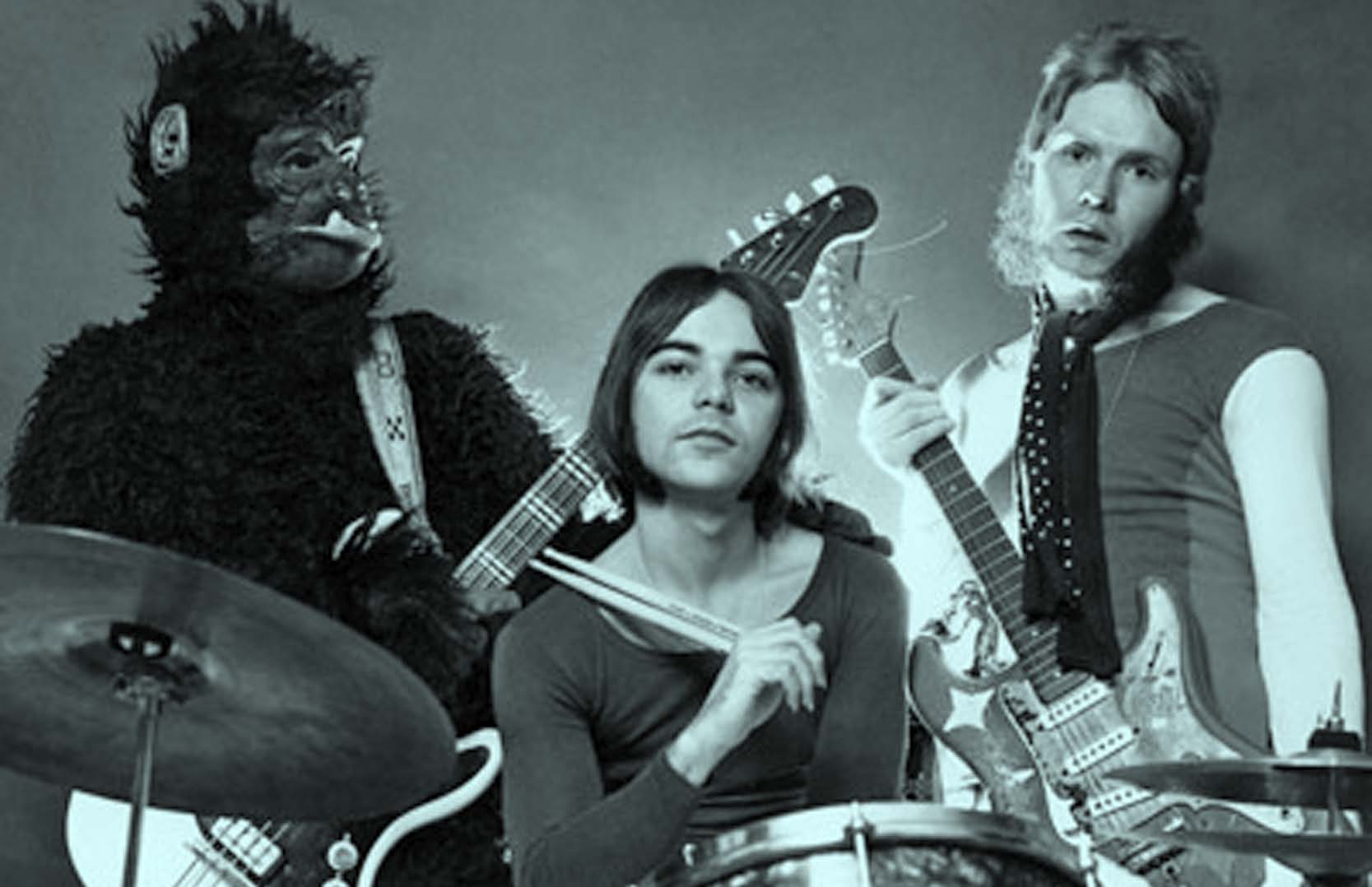
Although signed to Chiswick records, the masters of the pub-rock scene, Jesse feels that The Hammersmith Gorillas broke away from that and were playing in circles that gave birth to punk. “The Hammersmith Gorillas were definitely the first,” he triumphantly proclaims. Although falling into a style that can only be classified as punk, The Hammersmith Gorillas stayed friends with their mod heroes – John Children’s Chris Townson drummed on the Chiswick single, ‘She’s My Girl’. Jesse’s taking mod into the ’70s certainly succeeded. Whilst recording in Morgan Studios in ’77 one of the engineers commented on how blown away he was by their mod style. The engineer in question had once played in The Smoke and remarked, “You guys remind me of me in ’67!”
Jesse’s opinion on mod? “That was my thing in life. The Small Faces and The Who were indescribable. It was like watching God. It was a step further than humanity. Punk was nothing on that!”
The LP, Message To The World, received some acclaim, but not enough. With little radio play and an increasing tiredness with the scene, the band called it a day in ’79.
“In ’80 Spandau Ballet and the electronic sound was moving in. I moved out.’
Throughout the ’80s Jesse had little to do with music and managed a cleaning company – at last, he was making some decent money.
As the ’90s dawned Jesse was getting back into music and had reverted to the rock ’n’ roll style of his youth as The Jesse Hector Sound. However, after seeing a huge interest in the mod scene, Jesse met up with the now defunct London band The Clique (yes, an homage to his old pals) and was to be seen on stage with them on a number of occasions. He’s now even talking about getting his checked trousers out of the closet and growing his hair and opening up the Marriott parting once again…
Jesse Hector 17th July 1947 – 6th May 2026.
Ace Records’ product.
Subscribe to Shindig! today so that you have articles like this delivered to your door every month.