Shindig! Issue #179 – The Jetset
The arrival of THE JETSET on an unsuspecting early ’80s music scene was a breath of fresh air. Tongue-in-cheek self-mythologising on their debut EP suggested they were already famous and had their own TV series. The mischievous marketing was backed up with ’60s-inspired sunshine-pop to at least rival The Banana Splits, if not some of the band’s own heroes.
CARL TWEED talks to the remaining members about those early days in the old neighbourhood
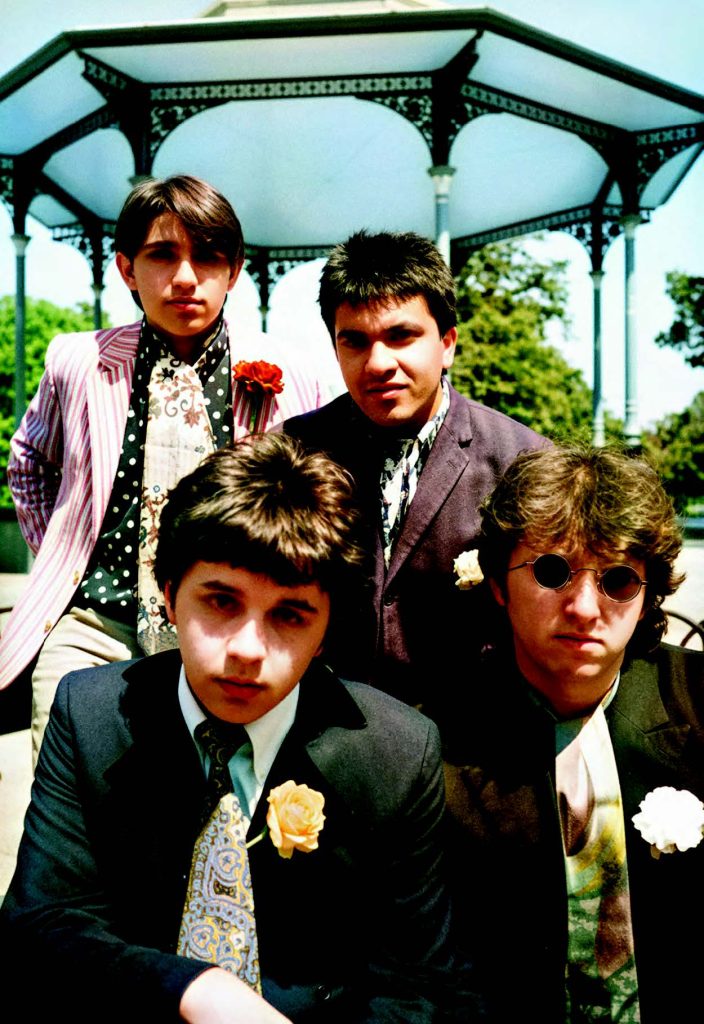
The Jetset’s debut album There Goes The Neighbourhood… built on the EP’s statement of intent. Paul Bevoir’s songwriting betrayed a real love and appreciation for ’60s sunshine-pop. Rather than slavish pastiches/copies of The Monkees’ and Beatles’ sounds, there were simply odd nods to their inspirations – a guitar riff here, a keyboard motif there.
There Goes the Neighbourhood was the highpoint for Angus Nanan. He reasons, “It’s the one I probably had the most influence over, with the keyboard parts I’d come up with on the demos going down pretty much unaltered. So when I listen to that album, I’ve got strong memories of where I was when I came up with, say, the keyboard solo on ‘Wednesday Girl’ and the chromatic progression in the verses over ‘The Man Who Lives Upstairs’.”
Paul notes, “Sadly, Paul Bonin decided to move to Berlin shortly before the LP was released, but fortunately, Mickey was around to help us out and we all chipped in for the following LP Go Bananas!”
With touches of Tamla Motown, bubblegum harmonies and slightly heavier guitars, the second album is a credible attempt at recreating the exuberance of classic ’60s pop. Also worthy of mention are the spoof adverts between the tracks. It certainly meets with Mickey Dias’ approval. “Ah well, I know our Paul will disagree with this. Although I love them all, Go Bananas! will always be my favourite album. Just every song on there for me is melodic pop at its best and they’re great to sing as well.”
Following a compilation of early demos and previously unreleased recordings called April May June And The Jetset on Anthony Meynell’s Hi-Lo Records, Vaudeville Park was a move towards a more English sound, with influences from The Kinks, Small Faces and Zombies, and is, for many fans, their most satisfying release.
Self-critical Paul, however, is not convinced. “We tried to make the songs on Vaudeville Park have more influences from UK ’60s groups, and I think we achieved that to a certain degree. Perhaps the final album didn’t work out as well as we’d hoped, but at least it was different. Paul Bultitude worked very hard on the arrangements, and he brought in many excellent musician friends and session players, including trumpets, woodwinds, violins, cellos and much more. But for me personally it didn’t work. Although I must say that Melvyn’s lead vocals are outstanding on that album. He was a truly talented and gifted singer.
“After the experience of Vaudeville Park, I decided I didn’t want to continue with The Jetset and we had a meeting to discuss the situation. Nobody seemed happy to hear this and, after a lot of discussions and agreements regarding keeping control of the recording process, I finally began to work on songs for what was to be Five. Sadly, the recording was not the pleasant experience we’d all hoped for. Most of the time nobody could even look at each other. One by one people left the sessions never to return. I finished the recordings alone with just the engineer Nick Robbins. However, I do remember some special moments of laughter between me and Melvyn, and those are what I choose to remember from that recording. Despite everything, Five remains my personal favourite album by The Jetset.”
To read the whole article order issue #179 here. For more on ’80s psych inspired music grab Kaleidoscope here.