Shindig! Issue #179 – nick nicely
In 1982, psychedelic music took a giant leap into the electronic era with the ground-breaking ‘Hilly Fields (1892)’. Years ahead of its time, the single was only heard and appreciated by a select few, but swiftly acquired legendary status, even as its creator fell into obscurity.
Now back with a stunning new album and riding the crest of his 21st century renaissance, nick nicely talks to BEN GRAHAM about art, acid, architecture and being considered “the godfather of hypnagogic pop”
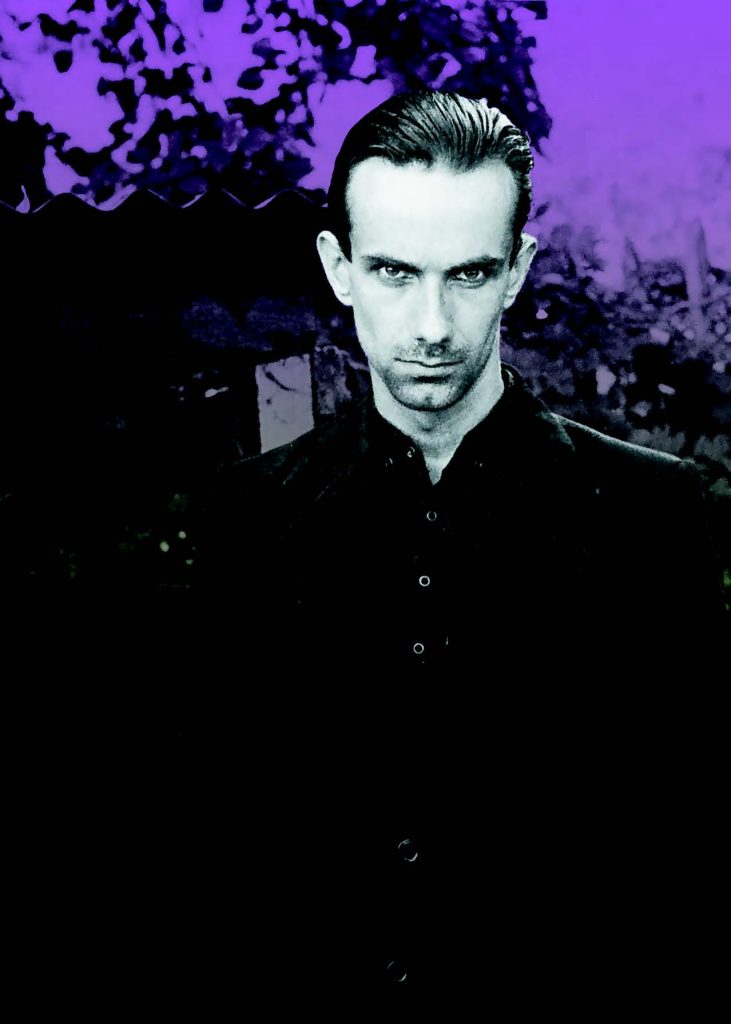
“I arrived in 1978,” nick nicely recalls, when asked about the enduring influence of Brockley on his work, from the ‘Hilly Fields’ single right up to new album Or A Brockley Afternoon. “In ’79 I started on psychedelics. I knew The Beatles’ work, but their psychedelic era came into focus strongly at that time. Psychedelics can give you a sense of location, and the beautiful Brockley Conservation Area Victoriana was quite something. Also, history has always been my thing, late 1800s, early 1900s. The area was atmospheric… we had some intense psychedelic experiences on Hilly Fields with its distant views. My new album, Or A Brockley Afternoon, has a slight nostalgic vibe, the title phrase being a euphemism for a psychedelic experience.”
Born Nickolas Laurien in ’59, nick took his musical alias (always lower case) from a childhood nickname and his initial influences from the ’60s pop and classical music he heard growing up in the family home in Hitchin. Exposure to the underground rock sounds of the later ’60s inspired him to take up the guitar, playing open mic nights with a folk trio at the turn of the decade. Heading to college in South London, he formed the nick nicely band, but the group split after a handful of gigs, leaving nick with the 4-track Tascam Portastudio they’d all chipped in to buy. He began writing and recording his own material, and in ’78 signed a publishing deal with the Heath Levy company.
Nick had started working with another Brockley musician, Geoff Leach (later to play with Barclay James Harvest among others), who had an early Roland mono synth and a Roland Strings string and brass synthesiser. He immediately recognised the potential of these new electronic instruments, especially to independent musicians who didn’t have the budget or resources to realise the sounds they heard in their imagination. As his songs became ever more unique and unlikely to be taken up by other artists, nick knew his days at Heath Levy were numbered, but was determined to make full use of the company’s eight-track recording studio before being given the boot. The result would be the first nick nicely single, ‘DCT Dreams’, initially released on his own Voxette label in ’80.
“I came up with a cheeky plan to take over the Heath Levy studio after the last session,” nick recalls. “We had to be out by 6am before the cleaners arrived, and so Geoff and I made up most of ‘DCT Dreams’ on the spot with the help of an old drum machine that played cheesy bossa nova dance rhythms, great for the track. The analogue sound blew me away. It felt like I had access to an orchestra.
“It’s difficult to truly explain the thrill of the new synths. Other artists I’ve read about say the same thing about that ’79-80 period, so exciting. Lyrically though I was in a surreal psych world. It was a strange mix of current and psych influences. Getting it finished took so long though, with many nights. Geoff wanted to stop this arduous work and I bought him out of the project and sold my 4-track cheap to him. I carried on the nights alone. He’d also helped with the B-side, ‘Treeline’ which we’d worked on at his place in Hackney. Anyway, I got found out. The bosses were pissed off but I had just about finished the two tracks after a couple of months.”
The Heath Levy office called nick in to sack him, but when they heard ‘DCT Dreams’ they held off, and no wonder. The song’s combination of trippy lyrics and melody with gloriously doomy synth riffs hits a similar sweet spot to early OMD or John Foxx, while ‘Treeline’ suggests a more psychedelically informed Kraftwerk. With no record-company interest, nick pressed up 1000 copies of ‘DCT Dreams’, using the money from the sale of his home studio, and promoted it to radio himself. The song started to pick up airplay, but unbeknownst to nick someone at Heath Levy had licensed ‘DCT Dreams’ to Hansa Records for European release, where it was a minor hit in France and the Netherlands. He never saw a penny, franc or guilder from this, and when Hansa decided to release the single in the UK in January ’81, it was considered old news and failed to garner any more attention or sales.
By this time, however, nick was already working on the more ambitious follow-up. Heath Levy and Hansa were both keen on another single in the same vein as ‘DCT Dreams’ to capitalise on the early ’80s synth-pop explosion, but nick had other ideas. Inspired by his love of history and tripping in his local park, ‘Hilly Fields (1892)’ combined DIY electronica with the mood and aesthetic of high ’60s psychedelia. The ambiguous science-fiction storyline, set in Victorian London, arguably made it the first Steampunk record, while its use of scratching predated Grandmaster Flash by several months. The jarring cut-up feel provided the missing link between the Dada and William Burroughs-inspired tape experiments of The Beatles and the sample-based electronic music of the later ’80s.
To read the whole article order issue #179 here. For more on ’80s psych inspired music grab Kaleidoscope here.