Shindig! Issue #178 – The Downliners Sect
Sick songs, skiffle and self-sabotage: THE DOWNLINERS SECT waived the rules of British R&B over a remarkable ’60s catalogue that continues to influence vigilante R&B heads to this day.
HUW THOMAS gets a handle on the gentleman ravers with sect appeal
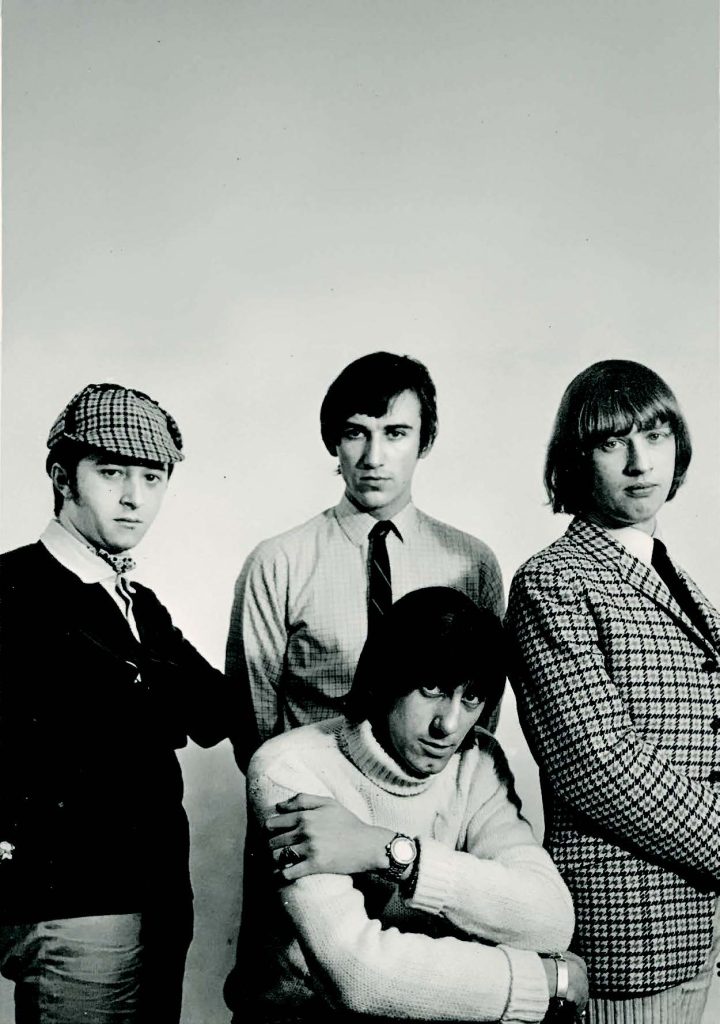
By the time they released the Nite In Gt. Newport Street EP in early 1964, The Downliners Sect were a cult. They had twice taken residencies replacing The Rolling Stones, first at Eel Pie Island and then at Studio 51, and at both spots they acted as a crucial proof of concept for serried rows of teenage mods. David Bowie would pattern his band The King Bees after them. Van Morrison decided to quit The Manhattan Showband and go into R&B after watching them play. Rod Stewart would beg to join them as harmonica player, only to be rejected in favour of Ray Sone. Some guys have all the luck, eh? Some of the Sect’s heroes were taking notice, too. In May ’64, Chuck Berry, fresh out of prison and on a landmark British tour, dropped in to Studio 51 to watch the band and, apparently, offered them a residency at Berry Park. He had a great night, signing autographs and talking guitar with the Sect – until someone whipped off his hat, revealing a hairnet he wore to keep his hair straight.
Nite In Gt. Newport Street was a DIY recording (Craine and Grant‘s fathers held up the microphones) and the product of necessity. What The Sect really wanted was a major record contract, having watched the Stones go national with ’Come On’. After a further Contrast EP, recorded in the studio, was scrapped, they were picked up by Cee Cee Productions, a new venture led by producer Mike Collier. A smart and slick-talking Cockney who shared the Sect’s interest in America, Collier had been a one-man British Invasion in the ’50s, working in New York as a plugger for London Records, flogging Tommy Steele records to a largely apathetic public. Now, he was back on home soil with tales from the promised land. He selected the Sect’s hoary take on Jimmy Reed’s ‘Baby What’s Wrong’ to be their first single and sold it to EMI’s Columbia label. Craine told the Swindon Advertiser that his band “play his [Reed’s] music most naturally – in fact, he’s one of our main sources of supply” but the single barely perforated the UK Top 30, making #29. Future UK releases wouldn’t even go that far.
Publicly, the Sect heaped praise on Collier; after all, he’d “made a lot of Shirelles records”, or at least that’s what he told Don Craine. Privately, there was some resentment. “I never had any faith in Mike Collier as a producer,” Terry Gibson told Ugly Things. “We never got much studio time. He was always quick to say ‘Yeah, that’s fine.’ Most, if not all our stuff was done in one or two takes, plus they were done live with no overdubs. We always felt a bit cheated ’cause we weren’t given the time, the expertise and the knowledge to make records as good as we wanted.” Gibson wasn’t happy with the take Collier chose for ‘Little Egypt’, the Leiber & Stoller number that became the Sect’s second single, nor the sound effects he appended to it, but to the kids at Studio 51, it sounded like British R&B at its beefy, bratty best.
Having signed a contract with Collier that stipulated three singles and an album each year, the Sect pressed on; they considered their third single ‘Find Out What’s Happening’ an improvement on the previous two. Craine, inspired by The Carter Family, plays a pawn shop Autoharp on the record though, despite his assertion that the sound was imitated by Pinkerton’s ‘Assorted’ Colours and The Lovin’ Spoonful, it is barely audible. The single bombed and the band’s first album, The Sect, did no better, despite crude but convincing tracks like a none-more-English version of ‘Too Much Monkey Business’ and a searing ‘I Wanna Put A Tiger in Your Tank’. Still, the Sect had the chance to meet another one of their idols whilst promoting the album. In a meeting coordinated by supermod Guy Stevens for Record Mirror, they came face-to-face with Jimmy Reed, who spoke diplomatically about British covers of his material. “The few that I’ve heard have been nice,” he told them. “I figure it would have been much better for everybody though if I could have been sitting there just playing along with them.” The Downliners Sect, multiple flops under their belt, had to agree with that.
To read the full article order issue #178. Better still subscribe so that you never miss an issue and have digital access to all back issues