Shindig! Issue #181 – Olivia Tremor Control
As a crucial part of the Elephant 6 collective, THE OLIVIA TREMOR CONTROL spearheaded a lo-fi DIY psychedelic revival in America during grunge’s mid-90s reign. But after two critically-acclaimed double albums of imaginative avant-pop, principal songwriters Bill Doss and Will Cullen Hart drifted apart. Now, following the pair’s tragic deaths, the third Olivia Tremor Control album has been released.
JONATHAN THORNTON traces the band’s history and talks to Derek Almstead, Jason NeSmith and Ron Kwasman, the Olivias who completed the new album for their departed friends.
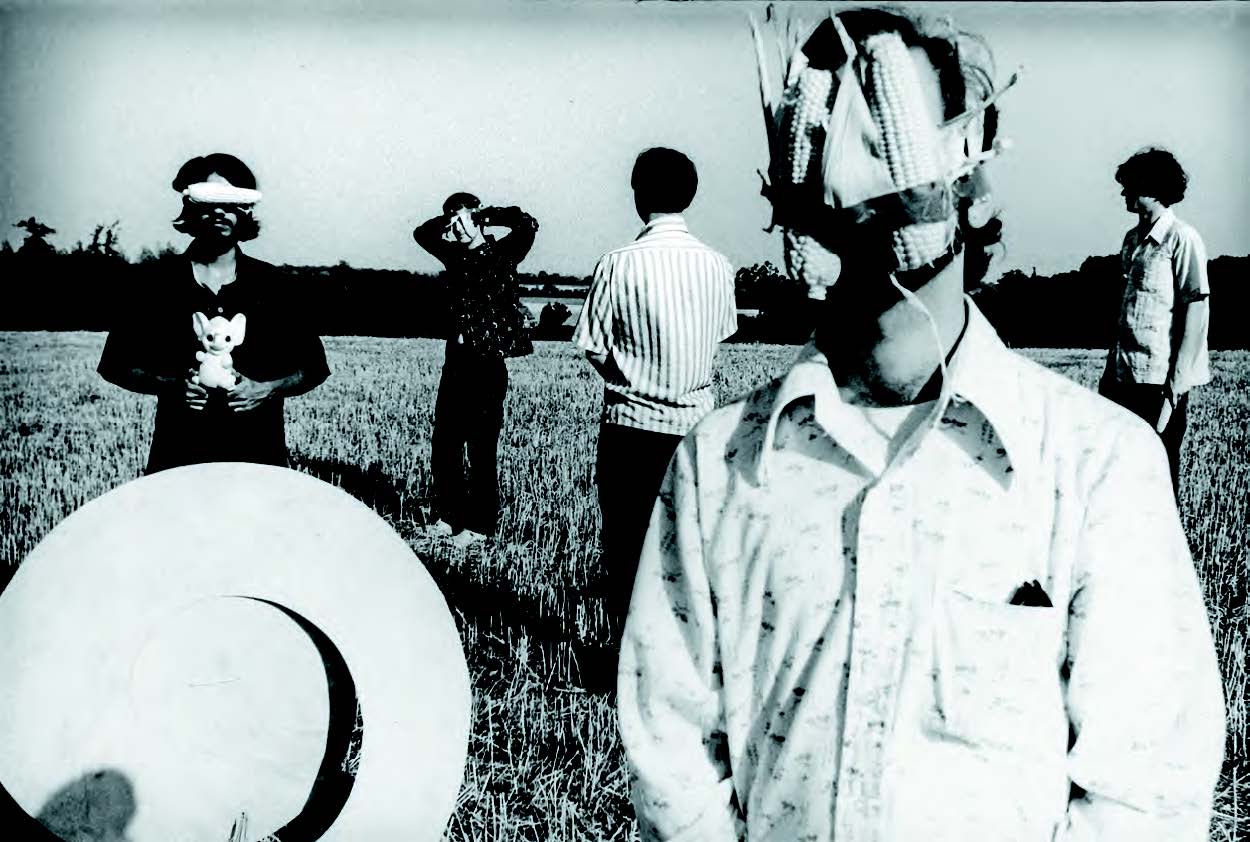
The beginnings of The Olivia Tremor Control, and the Elephant 6 collective, can be traced back to the friendship of some oddball kids in the small city of Ruston, Louisiana, in the late ’80s. Will Cullen Hart met Bill Doss, Jeff Mangum and Robert Schneider at Ruston High School, where they bonded over their shared love of music. While a proto-grunge style was prevailing in the American underground,Hart, Doss, Mangum and Schneider were obsessed with late ’60s psychedelia, particularly the work of The Beatles and Beach Boys, and the latter’sthen-unreleased masterpiece Smile. “The legend of Smile embodied every aspirationthat we had,” says Schneider in Adam Clair’s oral history Endless Endless: A Lo-Fi History Of The Elephant 6 Mystery. “We were obsessed with Smile, which we couldn’t hear. So we dreamed what Smile was like. The whole philosophy was so intriguing to us. It was the Holy Grail of everything we wanted music to be, even though we had never heard any of it.”
If the work of producers like Brian Wilson and Phil Spector seemed out of reach for a bunch of kids, the lo-fi recordings of Pavement and Flying Nun’s Chris Knox acted as a model that was more easily emulated. Hart, Doss, Mangum and Schneider began recording their own music on 4-track cassette recorders, trading tapes replete with invented whimsical band names, record labels and homemade covers. From these amateur experiments, they taught themselves to become proficient at making and recording music, and eventually from nthese disparate experiments emerged Cranberry Lifecycle, the nascent collective’s first serious attempt at writing songs.
The name Elephant 6 dates to this time. Where did it come from? Will Cullen Hart says in Endless Endless, “It sounded cool. Max Ernst had a painting called The Elephant Celebes, and I was like, ‘Uhhhh, Elephant 6.’ Couldn’t really pronounce ‘celebes’. Hart wrote it on the label of one of the cassettes he had recorded at home,and the name stuck.From the initial group nof four friends in Ruston and their projects – Doss and Hart’s Olivia Tremor Control, Mangum’s Neutral Milk Hotel, Schneider’s Apples In Stereo – Elephant 6 expanded in the mid-90s to encompass at least 52 acts, based largely in Denver and Athens. The musicians in the collective often shared housing and collaborated on each other’s recordings, leading to a Utopian atmosphere distinct from other local music scenes.
To read the whole article order issue #181 here. Subscribe here.