

EXCLUSIVE SHINDIG! QOBUZ PLAYLIST #28: COLLIDING MINDS – THE EFFECT OF PSYCHEDELIA ON THE 1980s
We’re very excited to be media partners with the truly unique online streaming platform and download store Qobuz. This month, the 28th of our monthly bespoke playlists, which take in all manner of genres and sub-genres, scenes and beyond, then and now, looks at various forms of ’80s psychedelia
Play here or use the scrollable frame with track list below. You can sign up for a free trial today. Plans start from £10.83 per month. For more on Qobuz read our interview with MD Dan Mackta here
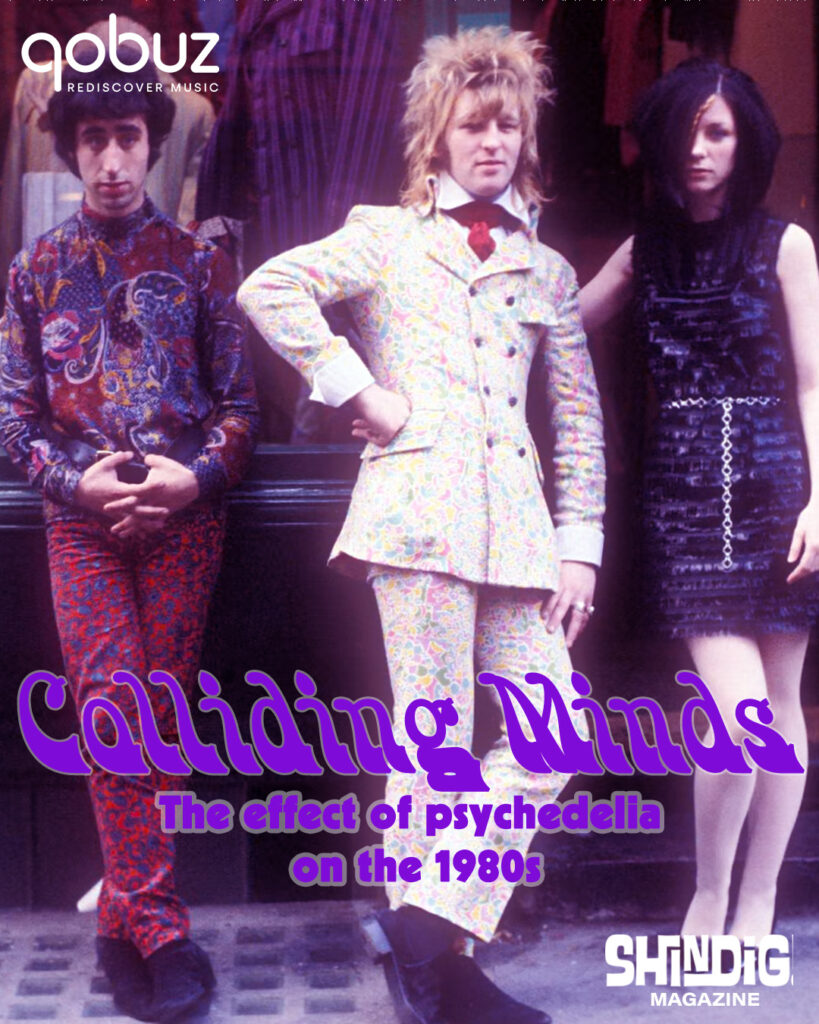
The image for this playlist features Marc and Gary from Le Mat, outside Soho’s Regency clothing emporium. Their previous band The Leepers were a promising mod revival act, but by the turn of the new decade many of that scene’s prime movers were embracing more lysergic sounds (see The Jam, Squire, and Purple Hearts). The Leepers becoming Le Mat indicated something else. Their very Dickensian style extended the late ’60s ruffles and frock coat look into an adjacent style to the New Romantics that exemplified something of a “psychedelic movement”. Their music went further too, with violin and gothic sensibilities, plus they supported Duran Duran.
That 1980 was just 13 years on from the psychedelic revolution says a lot. Sure, there was a lot of nostalgia for that carefree era, but punks like The Damned and The Undertones, Siouxsie & The Banshees and The Stranglers embraced the music in a non-revivalist fashion. Private press oddball, the high-voiced American Bobb Trimble hadn’t even left the ’60s, The Soft Boys were imperiously Syd, and electronic music maverick Nick Nicely reconfigured the mindset of ‘I Am The Walrus’ for the synth era.
By the mid-80s, synth-pop had become corporate (with once great act OMD embarrassingly covering ‘The Locomotion’) and the colossal Stock Aitken Waterman began to take the charts by storm with their manufactured, production-line hit machine. However, contrary to that, emerging indie-pop bands in love with The Byrds and The Velvet Underground, all-out ’60s garage/psych obsessives, and, by the end of the decade, Tears For Fears’ ‘Sowing The Seeds Of Love’ and the arrival of The Stone Roses, whose love of ’60s psych and mop-tops paved the way for the decidedly retrospective outlook that would follow, showed how the influence endured.
The ’80s was close enough to the ’60s to be a through-line. There were many cutting-edge innovations in technology, yet music was still predominantly analogue, and the classic guitar, bass, keyboard lineup the norm. Throughout the decade the boundary breaking notion of psychedelia loomed large – acid-house was a countercultural revolution on par with The Summer Of Love. It was an era which birthed both genuinely modern music, revived the past, and changed consensus. Psychedelia was a constant.