Issue #171 – Grateful Dead
It’s been six decades since the birth of the phenomenon known as THE GRATEFUL DEAD. Rarely has a musical act generated such devotion from its fans, one that shows no sign of diminishing, as generations of Deadheads continue their loyalty to the band and its many offshoots.
In celebration of this significant anniversary, ALEC PALAO surveys their formative recordings with a lightly controversial take on why we might cherish the very earliest of Dead
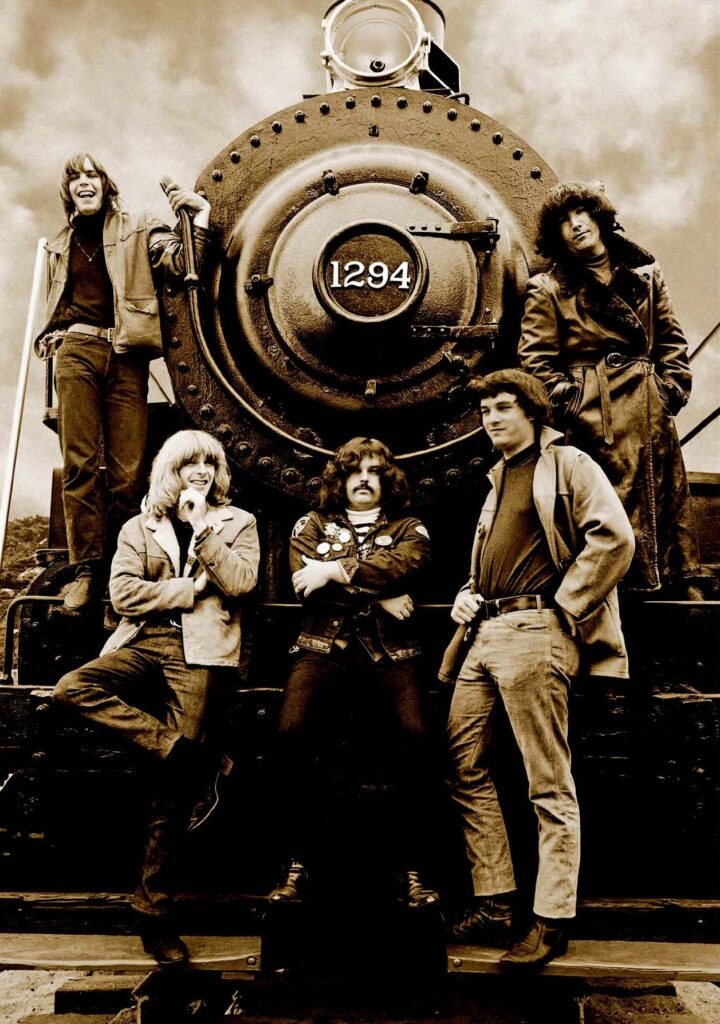
As much, or more, verbiage exists in regard to the life and times of San Francisco’s Grateful Dead as there are thousands of hours of sound recordings pertaining to the group. Study of the Dead and their music generates an academic zeal that is really quite remarkable in the realms of popular cultural scholarship. But then very few acts have ever had such a thorough documentation of their career from its relative inception.
I say this not as a Dead scholar, or even a Deadhead. Certainly, I love the lawlessness of Anthem Of The Sun, the baroque splendour of Aoxomoxoa, and the rich Americana of American Beauty and Workingman’s Dead, where the songwriting and the harmonies were finally in synch, equally. I don’t dismiss the band’s subsequent achievements and long-lived career at all, but I personally find pre-1971 Dead the most rewarding, and the primal rock ’n’ roll electricity of their first couple of years, in particular, endlessly engaging.
The lore of early Dead – their genesis through the Bay Area folk scene, the baptismal Acid Tests, the shoot-em-ups at Olompali, the communal vibes of 710 Ashbury etc etc – is so well-trodden and familiar, there’s little need for a rote history lesson here. But there are a couple of aspects to their primary forays along the “Golden Road” that are worth noting.
First and foremost, there is a simple reason why, from the very get-go, this band was incredibly tight: they practiced every day. If a Dead performance might be considered lacklustre, it was rarely because the band sounded under-rehearsed. On the local scene, only Quicksilver, who had perhaps slightly stronger rock ’n’ roll roots, was as together, but they had nowhere the same regimen, something that also allowed the early Dead, consummate omnivores that they were, to amass such a voluminous playlist so quickly.
When discussing – and sometimes dismissing – the Dead’s superb eponymous debut from ’67, the consensus from group members has often been that the album had been made in a hurry, with tempos to match (usually ascribed to certain individual’s Ritalin usage). But even a casual survey of extant Grateful Dead performances from ’66 and the first half of ’67 clearly shows that the group played everything fast, all the time. True, they might drop down on occasion for a smouldering blues or folk-rock ballad, but the Dead’s modus operandi at the clubs and ballrooms of the Bay Area, those counterculture gathering spots where they made their name, was to sate the desires of a dancing audience as much as coast on the inner thrust of the music.
You can certainly sense from the early Dead the liberating effect that playing electric rock ’n’ roll had on players that hailed from other disciplines. Folk, blues and R&B were already at the core of their zeitgeist, but the British example, be it Yardbirds rave-up or Stones/Them veracity, flicked the switch fully on. Furthermore, one can’t help gathering from the recordings the feeling that this band were completely enjoying the task at hand. Unlike say, the relatively dour Airplane who considered themselves stars from the very start, or the dark, politically-charged humour of Country Joe, The Grateful Dead had no real agenda outside of playing music and having fun whilst they did it.
We are of course discussing the original five-man Dead personnel, then the Bay Area’s own, who to a man, delivered the goods. Drummer Bill Kreutzman was all fills, pushes and flams whilst maintaining a solid backbone. Phil Lesh brought a smart-alec approach to the bass, sometimes contrary, sometimes elastic, but always in the pocket. The youthful Bob Weir maintained a dependable role as a rhythm player and purveyor of parts. An always hirsute Ron ‘Pigpen’ McKernan provided real soul from the very start, with his organ work an under-appreciated texture of the early years.
And then there was Jerry Garcia, whose electric guitar work conveyed the overall patina of the Grateful Dead with his “patented filigree guitar runs – psychedelic rococo at its finest,” as Gene Sculatti once memorably opined. He was also the principal vocalist, the band spokesman and, pretty much right from the start, the man who shouldered some kind of responsibility for what The Grateful Dead represented. Not for nothing was Bill Graham already referring to Garcia in late ’66 as “the Charles Atlas of the psychedelic set”.
One couldn’t really call the Dead’s style psychedelic at that time – though no doubt they sounded that way to the many in the crowds self-medicating. There is something faintly exotic about their sound in ’66 and ’67, with a kind of knowing, mischievous grin behind it all. Between-song patter from the vintage tapes frequently reveals this, alongside a bonhomie akin to a psychedelicised twist on A Hard Day’s Night. Along with the surviving audio and a fair smattering of footage, there is of course the pictorial evidence, which confirms their camaraderie whilst simultaneously espousing the sartorial elements of proto-hippie, mod/beatnik San Francisco. Dripping vintage ’66 cool in their suede and wide-whale corduroy, whilst coming across as faintly dangerous, each member’s idiosyncracies are made manifest – Garcia’s “Captain Trips” topper, Kreutzman and his Tiger Shop stripes, Lesh’s voluminous mop-top, Weir’s Iron Cross and the Wild Angels biker chic of Pigpen.
For those of us that weren’t there, the history remains endlessly fascinating, but the empirical evidence of early Dead greatness lies on those tapes. Once they escaped the psycho-babble of the Merry Pranksters, once they gleaned from sound guru Owsley “Bear” Stanley both how to get a clean feed from their gear and critique themselves, the Dead became a force to be reckoned with. And long before the rest of the world found out about them, when they were simply the Bay Area’s favourite dance band, the “good ol’ Grateful Dead”.
To read the whole story order issue #171 here. Subscribe to the mag here.