Shindig! #176 – Flamin’ Groovies
After releasing three albums of critically acclaimed but poor-selling proto-punk rock ’n’ roll, San Francisco’s FLAMIN’ GROOVIES found themselves without founding members Roy Loney and Tim Lynch, or a record label. But the addition of guitarist Chris Wilson, a move to Britain, and a change of direction would eventually lead to Cyril Jordan realising his vision of powerpop perfection.
JONATHAN THORNTON turns the clock back to June 1976 to see how the band recorded their masterpiece Shake Some Action
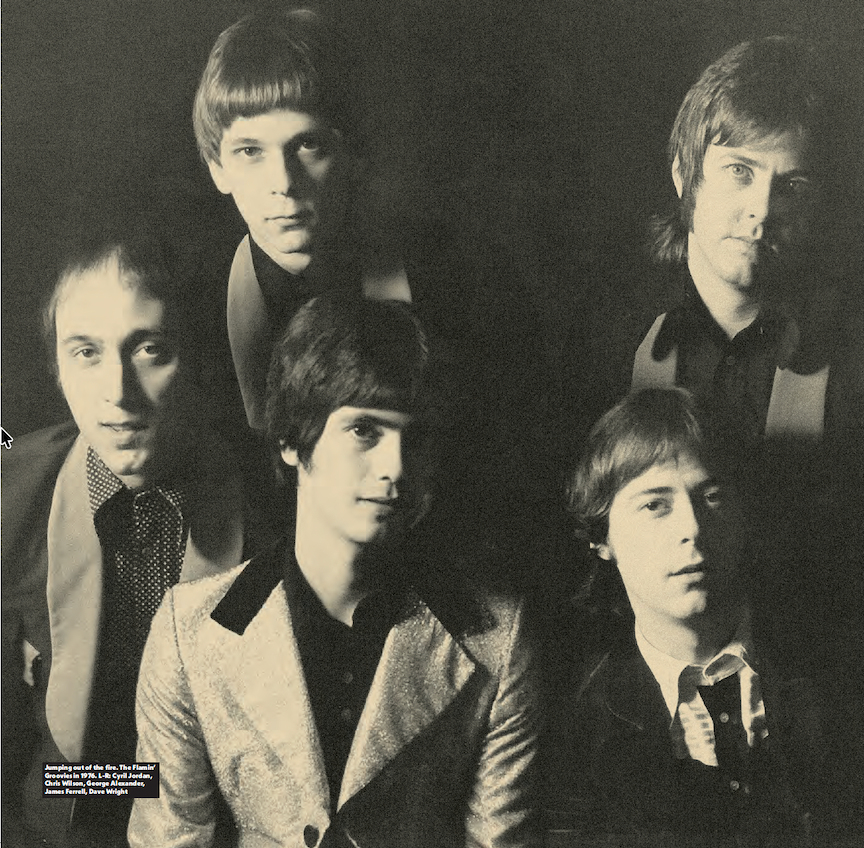
Shake Some Action was rightfully hailed as a classic in the press, but sales failed to set the world alight. Jordan blames Sire Records for not properly promoting the album, which certainly didn’t help its sales prospects. Weirdly enough, while the Loney-era Groovies would be acknowledged as an influence on the rawness and snottiness of punk, the new powerpop Groovies having moved away from that style of music now found themselves on the same bill as many punk groups in the UK. They were memorably supported by The Ramones – whose raw energy and love of ’50s rock ’n’ roll drew much from the early Groovies – and The Stranglers at The Roundhouse in ’76, a key moment in the development of punk in the UK. But while the Loney-era Groovies might have been able to capitalise on their sonic similarities to the younger bands, Jordan and Wilson were uninterested in playing the punk-rock game. In homage to their British invasion influences, they had started wearing three-piece suits and Cuban heels. In this get-up on the cover of Shake Some Action, the Groovies looked and sounded as out of time during the birth of punk as they had in the era of flower power 10 years earlier.
James Ferrell soon grew disillusioned with the Groovies’ new sound and left the following year, to be replaced by Mike Wilhelm, a friend of Wilson’s who had already co-written ‘I Saw Her’ with Jordan on Side Two of Shake Some Action. The same year Sire’s distribution was taken over by Warner Bros. Records, which should have given the Groovies more stability and better reach. They recorded a follow-up album, Flamin’ Groovies Now, again in Rockfield with Edmunds at the controls. Released in ’78, it was another album of gorgeous guitar-led power pop. Now features slightly less original material, but this is made up for with an inspired cover of The Byrds’ classic ‘I’ll Feel A Whole Lot Better’, and incandescent readings of The Beatles’ ‘There’s A Place’ and Paul Revere & The Raiders’ ‘Ups And Downs’. There’s also a brace of wonderful Groovies’ originals, particularly ‘All I Wanted’ and ‘Yeah My Baby’.
Edmunds was the intended producer for the Groovies’ final album with Sire, Jumpin’ In The Night, but was blocked by his manager, leaving Jordan to produce it with the help of Roger Béchirian. Jumpin’ features a handful more primo Groovies originals, notably the barnstorming title track that opens the record, and more excellent Byrds (three of them) and Beatles covers. The album was a commercial failure and failed to excite the critics as much as the previous two records. Tensions between Jordan and Stein led to the collapse of the band’s relationship with Sire. Wilson, beginning to become frustrated with Jordan’s insistence of doing more covers as opposed to original material, left in ’81, precipitating the complete collapse of the band by ’82. Jordan would struggle on with various new line-ups of the Groovies until a disastrously managed tour of Europe forced the band to break up in ’91.
To read the full article buy issue #176 here, Subscribe here.