Shindig! Issue #176 – Robyn Hitchcock
Nearly 50 years into a career that started with out of time psych noiseniks The Soft Boys in 1977 and has continued to defy categorisation across countless projects since, ROBYN HITCHCOCK is back with his 25th solo album The Confuser. The enduring psychedelic troubadour talks to BEN GRAHAM from his home in Nashville about his new record, his storied past, and how songs behave like cats but have to be caught like fishes
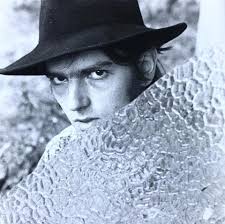
Rew, Seligman and Windsor all played on Hitchcock’s 1981 solo debut Black Snake Diamond Role, which featured signature songs like ‘Brenda’s Iron Sledge’ (inspired by the rise of Thatcherism), ‘Acid Bird’ and ‘The Man Who Invented Himself’. Although it may have sounded like a natural continuation of The Soft Boys, Hitchcock was keen to work in a more fluid way rather than writing for a band or for other people’s preconceptions of what he should sound like.
“I just took elements that I liked from music and wanted to write my versions of good songs,” he says now of the psychedelic thread that runs like a wild mercury seam through his work. “They’re not to do with LSD or consciousness expansion in the way that music was in ’66 or ’67. The world’s changed and I had those sensibilities musically, but I was never gonna go, ‘Peace and love, man’ or ‘Look at the dragons in the clouds.’ I wasn’t that deluded to think that the world was anything like it had been 10 or 20 years earlier. So I just equipped myself with certain totems of psychedelia like backwards guitar or double-tracked harmonies with a bit of phasing, the occasional use of electric sitar. But that was too subtle, too nuanced. It would’ve been easier to market us if I’d gone, ‘Yes, we are psychedelic, here we go boys, you’ve gotta wear some beads, the punks are gonna hate it but, you know, it worked for The Jam, looking mod…’”
Hitchcock further distanced himself from his past and the burgeoning “New Psychedelia” with the gothic funk of that year’s Groovy Decay album. Produced by Steve Hillage and liberally doused with Anthony Thistlethwaite’s saxophone, the album contains Hitchcock perennial ‘America’ but soon came to be seen (perhaps unfairly) as a mis-step by fans and Hitchcock himself. Years later, he would attempt to rescue the album by re-releasing it as Groovy Decoy, correcting the track listing and replacing half the songs with demo versions, but at the time, having released a compromised album that still didn’t sell or attract critical praise, and having lost yet another record deal, Hitchcock was unsure if he wanted to continue as a professional musician at all. Over the next two years he took work as a gardener and wrote lyrics for Captain Sensible’s second solo album The Power Of Love, while continuing to write songs and work on his visual art practice. This period of withdrawal from the public eye eventually led to the creation of Hitchcock’s first truly solo album, and second masterpiece: the spare, acoustic, quintessentially English and autumnal acid-folk of I Often Dream Of Trains.
“It didn’t seem like there was much of an audience for what I was doing,” Hitchcock recalls. “But songs kept coming to me, and I bought a four-track machine and I realised that I was actually still doing it, but I wasn’t sure. I wanted to test myself. Also my instinct was that if I laid low for a couple of years, maybe people would be interested when I came back. So I didn’t play any gigs for two years and when I started up again there was a queue around the block. It was only The Hope & Anchor, but it was a good sign.
To read the full article buy issue #176 here, Subscribe here.